Tags
ACA, ACP, CCIE wireless, CWAP, CWDP, CWNA, CWNE, CWSP, ECSE-A, ECSE-D, ECSE-T, ENWLSD, ENWLSI, UWA, WLFNDU
I still feel a lot of people aren’t aware of the learning paths available for those who want to pursue a career in Wi-Fi. So in this post, I’m outlining some of those paths to help anyone considering this journey get started.
When it comes to learning, there’s no better way than learning by doing — and Wi-Fi is no exception. Most Wi-Fi learning paths are product or vendor-driven, meaning you’ll gain hands-on experience with specific vendor configurations and tools.
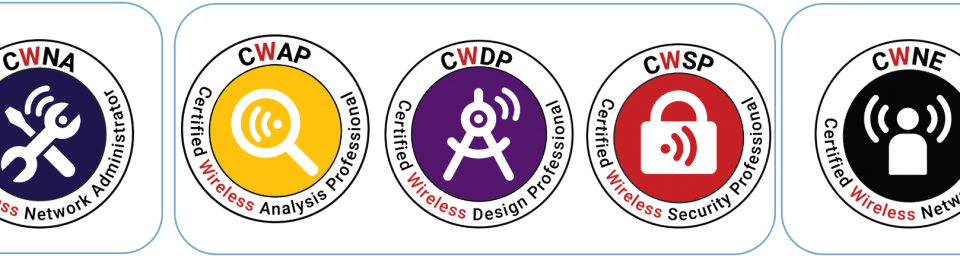
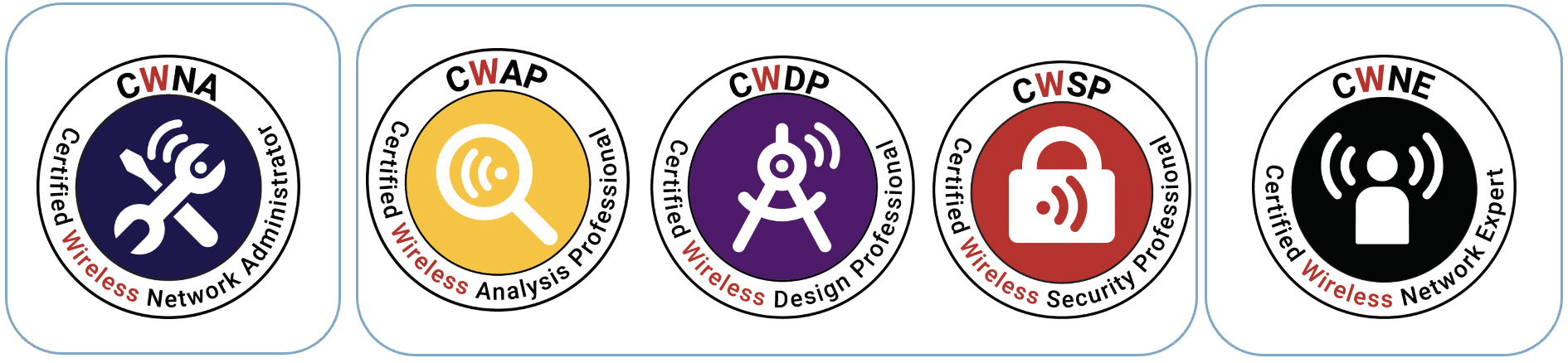
However, in the world of Wi-Fi education, we also have a strong vendor-neutral path: the CWNP (Certified Wireless Network Professional) program. I highly recommend starting with CWNA as a solid foundation for anyone entering the field. Reaching the expert level (CWNE – Certified Wireless Network Expert )requires industry experience, which you can continue to build while working in a Wi-Fi-related job. Here are the training certifications available from CWNP for Wi-Fi. (They have a similar path for Wireless IoT as well)
- Entry Level :
CWSS – Certified Wireless Sales Specialist
CWTS – Certified Wireless Technical Specialist - Administrator Level:
CWNA – Certified Wireless Network Administrator - Professional Level:
CWSP – Certified Wireless Security Professional
CWDP – Certified Wireless Design Professional
CWAP – Certified Wireless Analysis Professional - Expert Level :
CWNE – Certified Wireless Network Expert – Application process & no exams for this level.
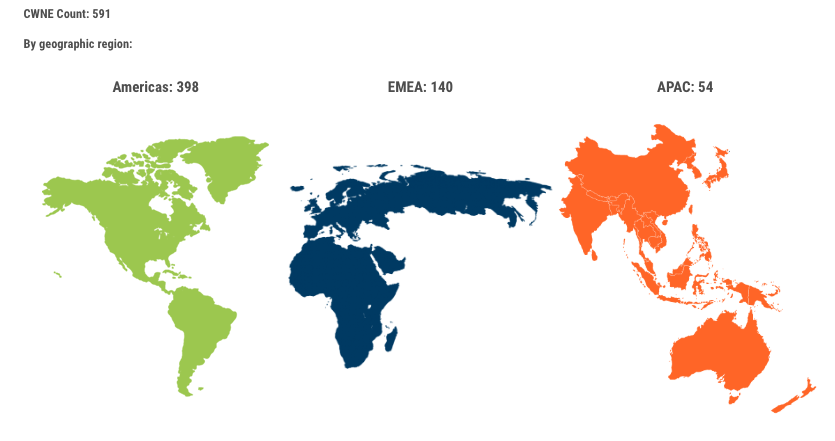
At the time of this post, only about 600 individuals worldwide hold the CWNE certification, making it a small and elite community. If you’re passionate about Wi-Fi technology and committed to learning, you have every opportunity to become one of them.
There are specific tools that help you perform RF design and validation — a rare skill that many professionals lack when it comes to enterprise Wi-Fi deployments. Here are some leading vendors and their respective training paths. If you use these tools in your job, it’s a good idea to get properly trained on them. Here are some leading vendors and their respective training paths.
Ekahau is one of the leading providers of Wi-Fi design and troubleshooting solutions, used by network professionals to plan, design, and optimize enterprise wireless networks. They offer a well-established training program that covers wireless design, troubleshooting, and advanced features of Ekahau products.



Hamina : Another vendor for Wi-Fi design and analysis. Peter McKenzie has developed a certification program for Hamina wireless.
- HCNA – Hamina Certified Network Architect
If you work in an enterprise environment, you mostly deal with products from a single vendor. Over time, if your organization switches from vendor A to vendor B, you’ll need to learn the new vendor’s specific products. The certification path for all enterprise vendors are not listed below. Please refer to your vendor’s official training resources for more information.
When it comes to Enterprise WLAN, Cisco is still the market leader and offers a couple of training options in the wireless stream; However, these have become less popular compared to the past, as Wi-Fi has become part of the broader Enterprise Infrastructure certification path.
- WLFNDU – Understanding Cisco Wireless Foundations
- ENWLSD – Designing Cisco Enterprise Wireless Networks
- ENWLSI – Implementing Cisco Enterprise Wireless Networks
- CCIE – Enterprise Infrastructure (Wireless)
If you are with Juniper Mist (now part of HPE), then you have following certification path available.
- JNCIS – MistAI-Wireless
If you are working with Aruba (HPE) wireless, there are few certification paths available.
- ACA – Aruba Networking Certified Associate (Campus Access)
- ACP – Aruba Networking Certified Professional (Campus Access)
If you are working with Ubiquity products there is one training path for Wi-Fi space.
- UWA (UniFi Wireless Admin)
Then there are good Wi-Fi related training options available well.
- WiFi Training (I have developed few digital contents for them)
- Wi-Fi7 from Zero workshop by Susinder
- Wireless Adjuster by Devin
Another way to break into the Wi-Fi industry is by building a strong network with WLAN professionals. Look for local Wi-Fi community meetups or conferences to establish those connections. I highly recommend the WLAN Professionals Conference and Wi-Co meetups to grow your networking and find a suitable opportunity to start your Wi-Fi career.
Here is a brief video summary of the post
If you have links to other useful Wi-Fi learning paths, Please share them in the comments, I’ll update the post with that information.
Update 15-Aug-2025
Based on the community feedback I have added the following, thank you very much sharing these detail
1. Wi-Fi University by 7Signal
 mrn-cciew
Great post, one other company I would recommend is 7 Signal and their Wi-Fi University http://www.wifiu.com
Thank you very much John providing this information. I have added it to my blog
Regards
Rasika
Totally agree with JWaas, it is a great post.
And if it has been a while since doing any serious study, I encourage you to consider doing the CWTS before venturing into the CWNA, to get your study habits ‘back in shape’ first, and get a good foundation to launch into the CWNA. It worked for me. (The CWNA has a broad scope, lots to get your head around).